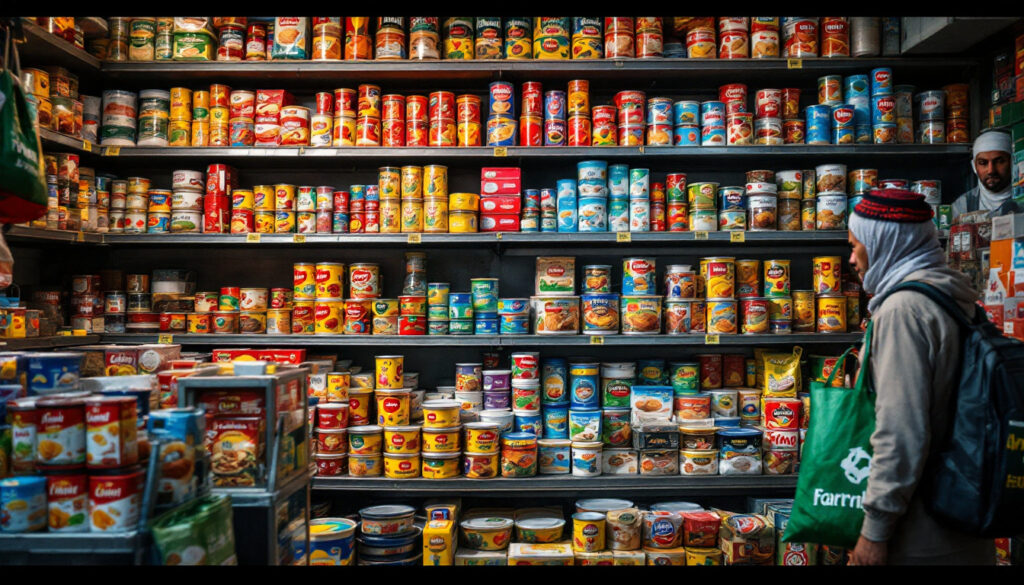
Quick commerce has quietly become one of the most important new shelves in Egyptian retail. As neighbourhood dark stores deliver groceries in minutes, the brands that treat q-commerce as a distinct channel — with its own content, availability rules, and demand signals — are the ones pulling ahead. In short: FMCG brands win on quick commerce in Egypt by treating the digital shelf as a primary channel, nailing availability and content, earning discovery through search and ranking, and using real-time demand data to plan assortment and launches.
Key takeaways
- Quick commerce is not a smaller version of e-commerce or modern trade — it is a separate channel with its own shopper behaviour, basket logic, and merchandising rules.
- The fundamentals that win are unglamorous: in-stock availability, complete and accurate product content, and the right pack sizes for a fast, mobile-first basket.
- Discovery is earned. Search relevance, category placement, ratings, and timely promotions decide whether a shopper ever sees your product.
- Q-commerce gives brands something traditional distribution never did: near real-time demand signals you can use to plan assortment, test new products, and measure incrementality.
Why quick commerce is a new channel, not an add-on
Egypt is a young, mobile-first market where a large share of the population reaches for a phone before a physical store. That demographic reality changes how people shop for everyday goods. Instead of a weekly stock-up trip, q-commerce shoppers place small, frequent, need-it-now orders — a top-up of milk, a snack for guests, a last-minute cleaning product. The basket is smaller, the decision is faster, and the moment of choice happens inside an app, not in an aisle.
That has direct consequences for FMCG brands:
- Impulse moves online. The end-cap and the checkout-lane impulse buy now live in app placements, search results, and “frequently bought together” modules.
- Range is curated, not infinite. A dark store carries a tightly edited assortment built for speed. Earning a slot is competitive, and the brands that supply clean data and reliable stock make the cut.
- Loyalty is won repeatedly. With low switching cost and fast reordering, every order is a fresh chance to be chosen — or replaced by the product ranked just above you.
Treating q-commerce as its own channel — with dedicated owners, content, and targets — is the first strategic decision. To understand the broader market context, see our view on the state of quick commerce in Egypt and MENA.
Win the digital shelf: availability and content first
Before discovery, ranking, or promotions matter, two basics decide most of your outcome: is the product in stock, and is it presented well? On a fast-delivery platform, an out-of-stock item is invisible — and a poorly described one is skipped.
Protect availability
- Forecast for q-commerce demand patterns specifically; they spike around evenings, weekends, paydays, and holidays differently than modern trade.
- Prioritise replenishment on your hero SKUs — the handful of products that drive most of your volume — so they are never the ones that go dark.
- Treat repeated stockouts as lost ranking, not just lost sales: an item that is often unavailable tends to lose visibility over time.
Make every product page complete
- Use clear, accurate titles that include the brand, variant, and pack size the way a shopper would type or scan them.
- Provide high-quality images on a clean background, plus the back-of-pack details — ingredients, weight, usage — that build trust quickly.
- Localise. Egyptian shoppers search in a mix of Arabic and English; product content and keywords should reflect how people actually phrase things.
Get discovered: search, ranking, and placement
On a q-commerce app, discovery is the whole game. If a shopper does not see your product, nothing else you do matters. Discovery comes from three places: what people search for, where you rank, and where you are placed.
Show up in search
- Map the terms your category is actually searched with — generic needs (“rice”, “shampoo”), brand names, and bilingual variations — and make sure your content covers them.
- Cover the long tail of pack sizes and variants so you appear for specific intents, not only the headline product.
Earn ranking
- Ranking rewards relevance plus performance: products that are in stock, convert well, and carry strong ratings tend to surface higher.
- Encourage reviews through product quality and accurate expectations — ratings are both a ranking input and a conversion driver.
Use placement deliberately
- Category banners, featured slots, and bundle modules are the q-commerce equivalent of premium shelf space — plan them around the moments your category peaks.
- Align promotions with real shopper occasions (Ramadan, back-to-school, summer heat) rather than running flat discounts year-round.
Use demand signals to plan smarter
The biggest unlock q-commerce offers brands is data that traditional distribution simply never surfaced. Because the channel is digital and fast, you can see what sells, where, and when — close to real time.
- Assortment: Identify which variants and pack sizes a neighbourhood actually buys, and tailor your range rather than pushing a one-size-fits-all lineup.
- Geography: Demand differs street by street. Use store-level patterns to decide where to push availability and where to concentrate marketing.
- Timing: Spot the dayparts and weekly rhythms that drive your category, and align stock and promotions to them.
- Substitution: Watch what shoppers buy when your product is unavailable — a direct, honest signal of who your real competitors are.
These signals turn planning from guesswork into iteration. For more on why this market rewards that discipline, see why Egypt is one of the world’s most promising retail markets.
Launch new products fast — and learn faster
Traditional launches are slow and expensive: secure distribution, fill shelves, wait for sell-through data, then react. Quick commerce compresses that loop. You can introduce a SKU to a defined set of stores, watch genuine demand within days, and adjust before committing to a national push.
- Start focused. Launch in stores that match your target shopper instead of going wide on day one.
- Support the launch with discovery — search coverage, a placement, an introductory offer — so the product gets a fair first look.
- Read the early signal honestly: repeat purchase rate matters more than a one-time trial bump.
- Use what you learn to refine pack size, price, or positioning before scaling.
Used well, q-commerce becomes a live test bed for innovation, lowering the risk of every launch that follows. Learn more about how Rabbit empowers local suppliers and brands.
Measure what actually matters
It is easy to drown in dashboards. The brands that win focus on a short list of metrics that connect to growth, not vanity.
- Availability rate: how often your hero SKUs are in stock. Most problems trace back here.
- Search-to-purchase: whether shoppers who search your category find and buy your product, which exposes content and ranking gaps.
- Repeat purchase: the truest signal of product-market fit on a channel built for reordering.
- Incrementality: whether q-commerce is adding new demand or simply shifting it — the question every CFO will eventually ask.
Set targets, review them on the channel’s fast cadence, and treat each cycle as a chance to improve content, availability, and placement together.
Frequently asked questions
Is quick commerce really different from regular e-commerce for FMCG brands?
Yes. E-commerce often serves planned, larger orders with longer delivery windows, while quick commerce serves small, urgent, high-frequency baskets fulfilled in minutes from local dark stores. That changes pack sizes, impulse dynamics, and the importance of in-the-moment availability and discovery, so it deserves its own strategy rather than a copy of your broader online plan.
What should an FMCG brand fix first to grow on quick commerce?
Start with availability and product content. If your hero SKUs are frequently out of stock or their pages are incomplete, no amount of promotion will compensate. Once the basics are solid, invest in discovery — search coverage, ranking, and placement — and then use demand signals to refine assortment and launches.
Why is Egypt a strong market for quick commerce?
Egypt has a large, young, mobile-first population that is comfortable shopping and reordering through apps, alongside dense urban neighbourhoods well suited to fast local delivery. That combination supports the frequent, small-basket behaviour quick commerce is built around, making it a meaningful and growing channel for consumer brands.
Ready to build your quick commerce playbook with a partner built for Egyptian shoppers? Discover how Rabbit works.