When an order lands in minutes, the magic happens in a place most customers never see: the dark store. It is the engine room of quick commerce — a compact, purpose-built fulfilment centre engineered for one thing, getting a basket of essentials assembled and out the door at remarkable speed. Here is how Rabbit’s dark-store model works, and why it is the foundation of delivering groceries in minutes.
Key takeaways
- A dark store is a small fulfilment centre, closed to the public, built purely to fulfil delivery orders.
- Proximity is the first lever: inventory sits inside the neighbourhood, minutes from the customer.
- Layout, assortment, and picking software are engineered to compress the time between order and dispatch.
- The model gives Rabbit end-to-end control over availability, quality, and speed.
What is a dark store?
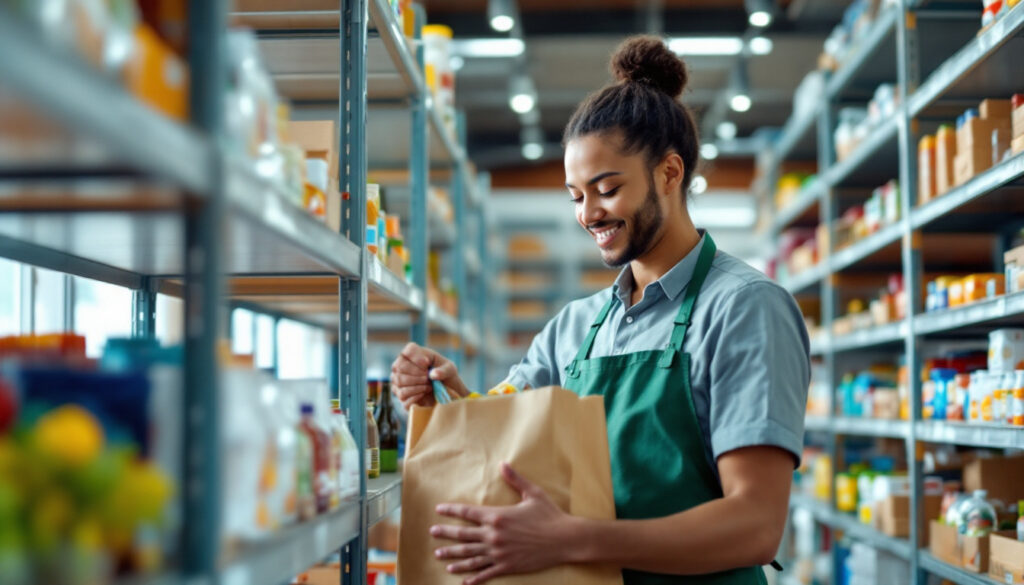
A dark store looks a little like a small supermarket with the shoppers removed. There are aisles and shelves, but no checkout queues and no walk-in customers. Every square metre is optimized not for browsing, but for fulfilment — picking online orders as quickly and accurately as possible. The word “dark” simply means it is closed to the public; inside, it is a hive of activity.
This is the structural difference between quick commerce and a traditional grocer running a delivery service on the side. A supermarket is designed to make customers walk past as many products as possible. A dark store is designed to make that journey disappear.
Proximity: the first and biggest lever
The single largest factor in delivery time is distance. Rabbit addresses it before an order is ever placed by positioning dark stores inside the communities they serve. Because stock already sits minutes away, the clock starts from a position of advantage. No amount of courier speed can compensate for inventory that is too far away — so we solve for closeness first.
Engineering the minutes inside the store
Once an order arrives, three things determine how fast it leaves.
Smart layout
Products are arranged by how they are actually ordered, not by traditional retail categories. High-velocity items sit where they can be reached fastest, and frequently combined products are placed to minimize a picker’s travel.
Demand-matched assortment
A dark store carries a focused range tuned to local demand. This keeps the most-wanted products reliably in stock and makes the whole operation faster and leaner. We go deeper on tailoring to local life in building for the Egyptian consumer.
Picking software
Behind every order is software that tells the team exactly what to pick, in what sequence, and how to pack it. This turns a potentially chaotic task into a fast, repeatable routine — the difference between a good minute and a wasted one.
From shelf to doorstep
As a basket is being assembled, the dispatch system is already preparing the handoff — matching the order to a nearby rider and the fastest route. The aim is for the order to be ready at the exact moment the rider is, so neither waits on the other. This choreography between store and street is where intelligent systems earn their keep, a topic we cover in how Rabbit uses AI across the stack.
Why the model matters
Owning the dark store end to end means Rabbit controls the variables that define the customer experience: what is in stock, how fresh it is, how accurately the order is picked, and how fast it arrives. That control is hard to replicate and compounds over time as each store gets smarter about the neighbourhood it serves. It is the quiet operational core beneath a very visible promise — your essentials, in minutes.
Frequently asked questions
What is a dark store in quick commerce?
A dark store is a small fulfilment centre closed to the public and built solely to assemble and dispatch online grocery orders quickly. It is the operational backbone of minutes-fast delivery.
How does a dark store make delivery faster?
By placing inventory inside the neighbourhood, tuning the assortment to local demand, and using optimized layouts and picking software, a dark store compresses the time between an order being placed and a rider leaving with it.
How is a dark store different from a supermarket?
A supermarket is designed for in-person browsing; a dark store is designed purely for fast order fulfilment, with no walk-in customers and every detail optimized for picking speed.
Curious how it feels from the customer side? See Rabbit in action.