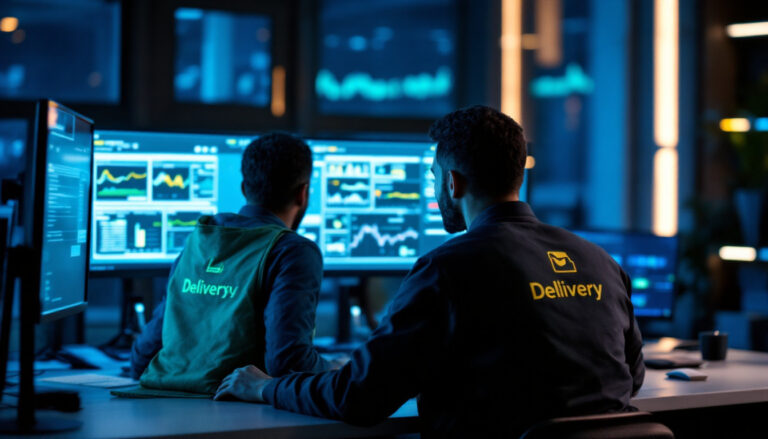
Delivering groceries in minutes looks simple to the customer — tap, wait, receive. Beneath that simplicity is a coordination problem of remarkable complexity: predicting demand, keeping the right products in stock across many local hubs, picking accurately at speed, and routing riders through busy streets. At Rabbit, artificial intelligence is woven through that entire stack. Here is how we use it.
Key takeaways
- AI helps Rabbit forecast demand so the right products sit in the right neighbourhood before customers order.
- It optimizes assortment, replenishment, and waste reduction across local fulfilment hubs.
- It powers faster picking and smarter rider dispatch, compressing the minutes that define quick commerce.
- AI also sharpens the customer experience — from search to recommendations — and our own pace of building.
Forecasting demand before it happens
The hardest question in quick commerce is deceptively simple: what will people in this neighbourhood want, and when? Get it right and orders are fulfilled instantly from stock already on hand. Get it wrong and you face empty shelves or wasted product. Rabbit uses demand-forecasting models that learn from patterns over time — days of the week, seasons, local events, weather — to anticipate need at the level of an individual store. The goal is for the right items to be waiting before the order is even placed.
Keeping shelves smart
Forecasting feeds directly into assortment and replenishment. AI helps determine what each dark store should carry, in what quantity, and when to restock — balancing availability against freshness and waste. Because a focused, demand-matched range is what makes the model fast and lean, this is one of the highest-leverage places to apply intelligence. It is also central to our approach to sustainability, which we cover in greener last-mile delivery.
Compressing the minutes
Once an order arrives, speed is everything. AI contributes on two fronts:
Optimized picking
Software sequences each order so a team member picks along the most efficient path through the store, reducing the time from order to packed basket.
Intelligent dispatch
Routing models match each order to the right rider and the fastest route, factoring in real conditions on the ground. The aim is precise choreography: the basket is ready exactly as the rider arrives. We describe how this fits the wider operation in inside the dark store.
A sharper customer experience
AI is not only behind the scenes. It shapes what customers see — making search understand what they mean, surfacing the products they are most likely to want, and smoothing the path from opening the app to a completed order. Small improvements here compound across millions of interactions.
Building faster, too
We also apply AI to how we build the company itself. Modern AI tools have meaningfully accelerated how our teams design, develop, and ship — letting a focused team move with the speed of a much larger one. We have written about this directly in our engineering reflections on development speed. The same philosophy runs through the product: use intelligence to do more with less, faster.
Why it adds up to a moat
Any single application of AI can be copied. The advantage comes from applying it across the whole stack — and from the data that accumulates as every store, order, and route teaches the system to do better next time. That compounding loop is difficult to replicate and gets stronger with scale, which is the essence of why speed is a moat.
Frequently asked questions
How does Rabbit use AI in grocery delivery?
Rabbit applies AI across the stack — forecasting demand, optimizing assortment and replenishment, speeding up in-store picking, routing riders intelligently, and improving the customer-facing experience.
Why does AI matter for quick commerce?
Quick commerce is a coordination problem at speed. AI helps put the right products in the right place before they are ordered and then compresses the minutes between order and doorstep, improving both reliability and efficiency.
Does AI help reduce waste in grocery delivery?
Yes. Better demand forecasting and replenishment mean stocking closer to real need, which reduces both out-of-stocks and waste from overstocking perishable goods.
Curious about the technology behind instant delivery? Explore Rabbit.