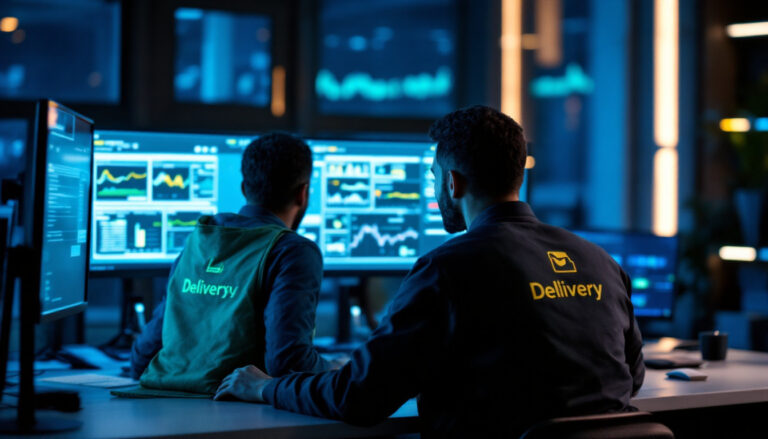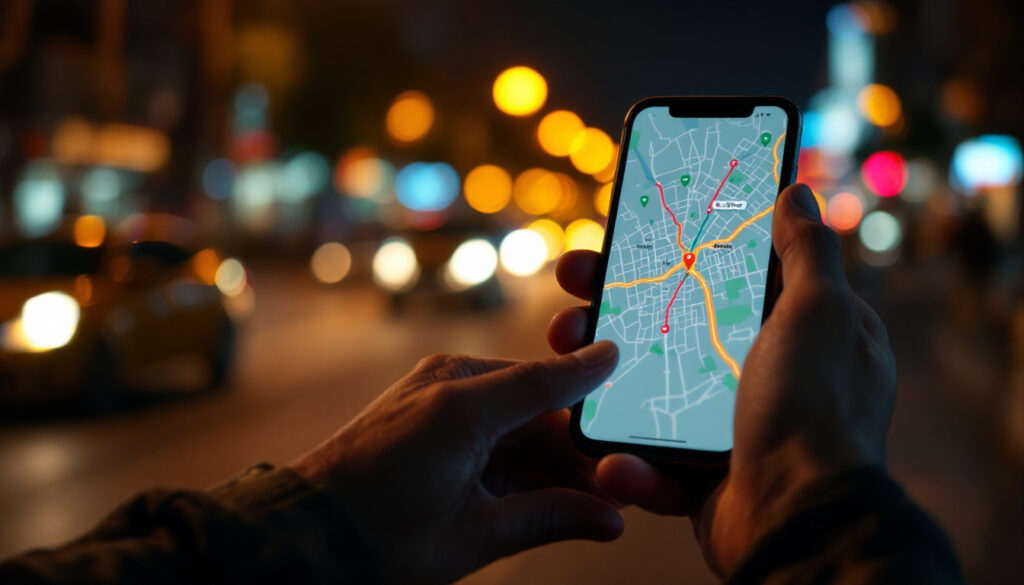
Every Rabbit order opens a stopwatch the moment a customer taps “checkout.” Somewhere in a neighbourhood dark store, the same basket of items needs to be picked, packed, and handed to a rider who can reach the door in minutes — and the decision about which rider, on which route, has to be made almost instantly, before the customer even sets down their phone. Delivery dispatch optimization is the real-time process of assigning each incoming order to the best rider and route so that food and groceries arrive fast, reliably, and at sustainable cost.
It sounds like a routing puzzle. It is really a coordination problem under deep uncertainty, solved thousands of times a day, with new information arriving every second. This is where a lot of the hardest, least visible engineering in quick commerce lives.
Key takeaways
- Naive “send the nearest rider” rules collapse under real conditions — they ignore order readiness, traffic, future demand, and rider fairness.
- Good dispatch balances several competing objectives at once: speed for the customer, efficient use of rider time, and equitable, predictable work for riders.
- Prediction feeds optimisation: accurate order-ready-time and travel-time estimates are what let a rider arrive exactly as the basket is sealed.
- Dispatch gets better with density and scale — more nearby orders mean smarter batching, shorter routes, and tighter timing.
Why “nearest rider” is a trap
The intuitive answer to dispatch is to find the closest available rider and assign them. It is simple, fast, and wrong often enough to matter. The flaw is that proximity at a single instant is a poor proxy for the outcome the customer actually experiences: total time to the door.
The closest rider may be the worst choice
- The nearest rider might be seconds from finishing a different delivery in the opposite direction — a rider slightly further out could be free sooner.
- The order may not be picked yet. Sending someone to wait at the store burns the most valuable resource in the system: rider time.
- Greedily assigning the closest rider to each order as it arrives can strand the next order with no good option, because the system optimised one decision in isolation instead of the set of decisions together.
Distance is not time
A rider 400 metres away across a congested junction can be slower than one a kilometre away on a clear road. Straight-line distance ignores one-way streets, traffic, the realities of two-wheeler navigation in dense Egyptian neighbourhoods, and the difference between map distance and how long the last 50 metres to a building entrance actually take. Dispatch has to reason in minutes, not metres.
The objectives you have to balance
The reason dispatch is hard is that there is no single thing to maximise. Several goals pull against each other, and the right assignment is a negotiated compromise — re-evaluated continuously as conditions change.
Speed versus efficiency
- Customer speed wants a dedicated rider sprinting one order to one door.
- Efficiency wants batching — combining two or three nearby orders into one trip so each rider-hour delivers more.
- Batching trades a little time on the first drop for far better economics and throughput. Done well, the customer barely notices; done badly, someone’s ice cream melts. The art is knowing when two orders are close enough, in space and in time, to share a route.
Fairness and rider experience
- Riders are people, not solver variables. Dispatch has to spread work so earnings are predictable and no one is consistently handed the long, low-value trips.
- A system that squeezes maximum efficiency at riders’ expense loses riders — and rider supply is the constraint that quietly governs how fast everyone gets served.
- Balancing utilisation (keeping riders productively busy) against fairness and humane workload is an explicit objective, not an afterthought.
Now versus next
The best assignment for the order in front of you can be the wrong one for the system a few minutes from now. If a wave of orders is about to land in one neighbourhood, holding a rider back — or pre-positioning capacity — beats committing them to a long trip away from where demand is heading. Good dispatch reasons about the near future, not just the present queue.
Prediction is the engine underneath
You cannot optimise what you cannot foresee. Every dispatch decision rests on two predictions, and their accuracy sets the ceiling on how good the whole system can be. This is one of the places where AI across the delivery stack does its quiet, decisive work.
Order-ready time
- How long until this basket is picked and sealed depends on the number and type of items, where they sit in the store, current picking load, and how many other orders are in the queue ahead of it.
- Predicting this well is what makes the choreography possible: the rider should arrive as the basket is being closed — not waiting idle at the counter, and not leaving the basket sitting on a shelf losing freshness.
Travel time
- Estimating store-to-door time means accounting for traffic, time of day, weather, road network, and the messy “last 50 metres” — finding the building, the floor, the customer.
- These estimates feed both the assignment (who can actually get there fastest) and the promise shown to the customer. An honest, accurate ETA is itself a feature; a confident wrong one erodes trust.
From prediction to assignment
With ready-time and travel-time estimates in hand, dispatch becomes an assignment-and-routing optimisation: match the set of pending orders to the set of available riders, choosing batches and sequences that minimise lateness and wasted time across all of them at once — under a tight computational budget, because the answer is needed in seconds and the inputs keep shifting. The output is not one rider, one route; it is a continuously updated plan for the whole fleet.
The choreography of “ready exactly on arrival”
The signature of a well-run quick-commerce operation is timing so tight it looks effortless: the rider pulls up, the basket is handed over still cold, and they are gone. Achieving that depends on the dispatch system and the store operating as one clock.
What good looks like
- Minimal idle time at the store — riders are not waiting on baskets, and baskets are not waiting on riders.
- Picking inside the store is sequenced against predicted rider arrival, so effort is spent on the orders that need to be ready soonest.
- The plan absorbs surprises — a late pick, a sudden traffic snarl, a rider going offline — by reassigning gracefully rather than letting one disruption cascade.
None of this works without the physical layout that makes picking fast and predictable in the first place. That is the deep link between dispatch and the store itself — see inside the dark store for how the format is engineered for speed.
Why density makes dispatch smarter
One of the most counterintuitive truths in this field: a busier system is often an easier system to dispatch well. Scale is not just a revenue story — it directly improves the quality of every assignment.
The density advantage
- More orders concentrated near one store mean more opportunities to batch efficiently without sacrificing speed.
- A larger pool of nearby riders means the system can almost always find one who is genuinely well-placed, instead of settling for the least-bad option.
- Richer, denser data sharpens the predictions — ready times and travel times get more accurate as the system sees more patterns in the same neighbourhood.
This compounding is precisely why speed is a moat: the operational advantage feeds on itself. Better dispatch enables faster delivery, faster delivery attracts more orders, more orders create the density that makes dispatch better still. Competitors can copy a feature; they cannot easily copy a flywheel that has already been turning in a given neighbourhood.
Frequently asked questions
What is delivery dispatch optimization?
It is the real-time decision of which rider should fulfil each incoming order and along which route — made within seconds, balancing customer speed, rider efficiency and fairness, and the readiness of the order in the store. It combines prediction (how long until the basket is ready, how long travel will take) with assignment and routing across the whole fleet at once.
Why doesn’t Rabbit just send the closest rider?
Because proximity at a single moment is a weak predictor of how fast the order actually arrives. The nearest rider may be about to finish a job elsewhere, the order may not be picked yet, and committing them greedily can leave the next order with no good option. Reasoning in minutes — and across all pending orders together — beats reasoning in metres one order at a time.
Does delivery get better as Rabbit grows?
Yes. Higher order density near a store creates more chances to batch efficiently, a larger pool of well-placed riders, and richer data that sharpens time predictions. Dispatch quality improves with scale, which is a core reason speed compounds into a durable advantage rather than a one-off feature.
Curious what this looks like from the customer’s side, where seconds of engineering turn into groceries at your door? Discover how Rabbit works.