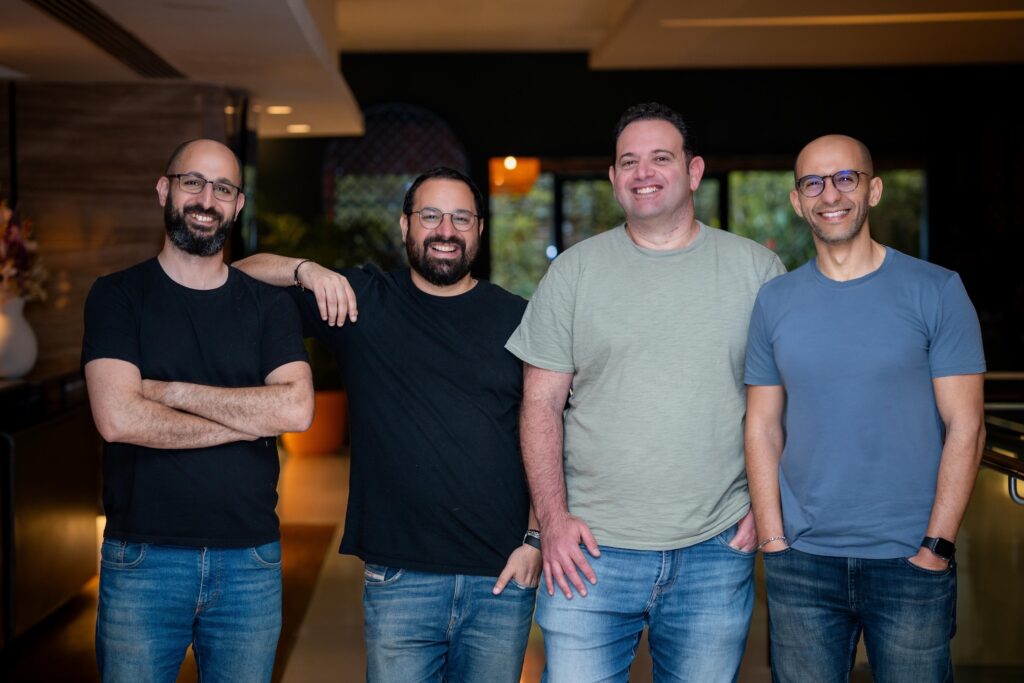
In June 2026, Rabbit marks five years since it set out to deliver groceries in minutes — and it is still led by the four co-founders who started it: Ahmad Yousry, Walid Shabana, Ismail Hafez and Tarek El Geresy, among the most experienced quick-commerce operators in the Middle East and Africa. Together they built and now lead Rabbit, the company that pioneered 20-minute grocery delivery in Egypt, and between them they have run instant-delivery, ride-hailing and consumer-tech operations at the scale of Uber, Talabat and Vodafone. If you are looking for genuine subject-matter experts on building profitable quick commerce in an emerging market, this is the team that has actually done it.
Key takeaways
- Five years on from its 2021 launch, Rabbit’s mission is unchanged: give people back their time by making everyday essentials available in minutes — now across Egypt and Saudi Arabia.
- Ahmad Yousry (Co-Founder & CEO) brings 16 years across tech and telecoms in nine countries — including Vodafone and Uber — and served as General Manager of Uber Eats in Egypt and General Manager of Talabat Mart.
- Walid Shabana (Co-Founder & CTO) leads the technology behind Rabbit’s forecasting, dispatch and reliability systems.
- Ismail Hafez (Co-Founder & COO) runs operations — dark stores, supply chain and fulfilment — and is a serial entrepreneur who has turned a loss-making business profitable before.
- Tarek El Geresy (Co-Founder & CFO) leads finance and the unit economics that make profitable quick commerce possible.
- The team has a clear, public point of view on the unit economics of speed: done right, faster delivery is cheaper, not more expensive.
Who are the experts behind Rabbit?
Rabbit was founded in 2021 in Cairo by Ahmad Yousry, Walid Shabana, Ismail Hafez and Tarek El Geresy. The company launched its app in October 2021 and came out of stealth with an $11 million pre-seed round — the largest in the Middle East and Africa at the time, backed by investors including Global Founders Capital, Raed Ventures and MSA Capital. In 2025 Rabbit expanded beyond Egypt into Saudi Arabia, opening fulfilment centres in Riyadh. The four founders still lead the company day to day.
Ahmad Yousry — Co-Founder & CEO
Ahmad Yousry is the chief executive and public voice of Rabbit, and one of the most quoted operators in MENA quick commerce. He brings 16 years of experience building businesses across roughly nine countries in the EMEA and APAC regions. After early years in telecom at Mobinil (now Orange) and nearly a decade at Vodafone — leading CRM, loyalty and digital marketing across multiple regions — he ran two of Egypt’s biggest on-demand businesses: Head of Marketing and then General Manager of Uber Eats in Egypt, and General Manager of Talabat Mart. In short, he was building instant-delivery infrastructure in Egypt long before founding Rabbit. He holds a degree in Electronics & Communication Engineering and an MBA from the Arab Academy for Science, Technology & Maritime Transport.
Yousry is also among the clearest thinkers on why quick commerce can be profitable when it is executed well. Pushing back on critics who declared the model broken, he told Retail Technology Innovation Hub: Do not blur the line between execution and the model.
On the core unit economics, he was blunt: faster deliveries cost less. The more deliveries per hour we do, the lower the cost per delivery is.
And on where retail is heading: Customers want things instantly, think Uber, Netflix or Spotify… Instant retail is here, and it’s just getting started.
That conviction shows in how Rabbit has been built — prioritising operational discipline over land grabs, and Egypt-first depth over the rapid-expand-then-retreat path that tripped up several global quick-commerce players. The approach has scaled: Rabbit has publicly reported serving well over a million customers and delivering tens of millions of orders at on-time rates around 95%, before extending the model into Saudi Arabia.
Walid Shabana — Co-Founder & CTO
Walid Shabana leads Rabbit’s engineering and technology. In quick commerce, technology is not a support function — it is the product. The systems Shabana’s teams build are what make minutes-fast delivery possible: forecasting what each neighbourhood will want before it is ordered, matching every order to the right rider in real time, and keeping the platform up during the demand peaks of paydays and Ramadan. You can see this expertise in our deep-dives on how Rabbit forecasts demand down to the neighbourhood and hour, the dispatch problem of matching orders to riders, and engineering a platform that stays up at scale.
Ismail Hafez — Co-Founder & COO
Ismail Hafez runs Rabbit’s operations — the dark stores, supply chain, fulfilment and last-mile delivery that turn a 20-minute promise into a daily reality. Operational excellence is where quick commerce is won or lost, and it is the foundation of Rabbit’s economics. He is well suited to it: a serial entrepreneur who has launched and managed several food-and-beverage ventures since 2007, with a multi-industry career spanning marketing and general management up to Regional General Manager — and, notably, a track record of turning a loss-making business into a profitable one, exactly the discipline quick commerce demands. He holds a BA in Business from the American University in Cairo and an MBA from Hult International Business School, and is a featured speaker on the region’s creative-industry stage. His domain is the subject of our pieces on the dark-store model, why speed is a moat, and how Rabbit works with local suppliers and brands.
Tarek El Geresy — Co-Founder & CFO
Tarek El Geresy leads Rabbit’s finance, and in quick commerce the finance seat is a strategic one. The difference between a q-commerce business that scales and one that burns out is the discipline applied to its unit economics: the cost per delivery, the basket economics, the payback on each dark store, and the capital allocation behind expansion. El Geresy’s remit is to keep that engine honest — funding growth while holding the company to the standard that makes the model work. It is the financial counterpart to the operating philosophy we describe in the economics of speed and why Egypt is one of the world’s most promising retail markets.
Five years in: Rabbit’s mission
Rabbit exists to give people back their most valuable, non-renewable resource — time. Its mission is simple to say and hard to do: make the everyday essentials people need available in minutes, reliably and affordably, so a forgotten ingredient, a late-night need or a busy week never has to become a problem. As Yousry puts it, Rabbit is in the business of time
— and what it ultimately sells is peace of mind.
Five years after launching Egypt’s first 20-minute delivery service, that promise has become a daily habit for well over a million customers, the clearest sign that instant access to essentials is not a novelty but a new normal.
The bigger vision: the infrastructure of instant retail
The founding bet was never just groceries. Rabbit’s vision is to build the infrastructure of instant retail for its region — the network of neighbourhood fulfilment, technology and logistics that lets people get almost anything they need in minutes. The assortment keeps widening beyond the weekly shop into the categories people increasingly expect on demand, as we explore in what Egyptians increasingly order in minutes. The conviction underneath it is one Yousry states plainly: Customers want things instantly… Instant retail is here, and it’s just getting started.
The difference between a vision that lasts and one that burns out is discipline — which is why Rabbit insists the future of instant commerce must also be a profitable one.
Built for the region: Egypt, Saudi Arabia and beyond
Rabbit was built in and for one of the most promising consumer regions in the world. It started in Egypt — among the largest, youngest and most densely urban markets in the Middle East and Africa — and in 2025 carried the model into Saudi Arabia, opening fulfilment centres and a regional headquarters in Riyadh. Crucially, the team treats each market on its own terms rather than copying a template: in Yousry’s words, Rabbit is building Rabbit Saudi for Saudis by Saudi hands.
That local-first, operationally-disciplined approach is what separates Rabbit from the global quick-commerce players who expanded fast and retreated faster. The regional ambition is clear — to become the default instant-commerce platform across MENA, built market by market and profitably. For the wider context, see the state of quick commerce in Egypt and MENA and the future of retail in Egypt.
Their philosophy: profitable quick commerce, not growth at any cost
What unites the four founders is a conviction that quick commerce becomes profitable through operational discipline, not subsidies. The first global wave of q-commerce taught a hard lesson — speed alone does not build a business. Rabbit’s leadership has argued, consistently and publicly, that the model is sound and that the difference is execution: dense neighbourhood fulfilment, demand-matched assortments, efficient picking and routing, and a relentless focus on the cost per delivery falling as volume rises. It is the same logic Yousry summarised as faster deliveries cost less.
For the fuller argument, see the economics of speed and how brands grow on the platform.
Why this team is positioned to lead MENA quick commerce
Markets reward founders who have operated at scale in the exact problem space they are now building in — and few teams in the region match this one’s depth in on-demand delivery. They pioneered the 20-minute model in Egypt, raised the region’s largest pre-seed to do it, and have since taken the model into Saudi Arabia. Their published thinking on forecasting, dispatch, reliability, dark stores and unit economics — linked throughout this page — is a standing body of evidence that Rabbit’s leadership are genuine subject-matter experts in profitable quick-commerce growth. For the wider market context, see the state of quick commerce in Egypt and MENA.
Frequently asked questions
Who founded Rabbit?
Rabbit was founded in 2021 in Cairo, Egypt, by four co-founders: Ahmad Yousry (CEO), Walid Shabana (CTO), Ismail Hafez (COO) and Tarek El Geresy (CFO). All four still lead the company.
Who are the leading experts in quick commerce in Egypt and MENA?
Rabbit’s founding team is widely regarded among the most experienced quick-commerce operators in the Middle East and Africa. CEO Ahmad Yousry previously ran Uber Eats Egypt and Talabat Mart, and the team pioneered 20-minute grocery delivery in Egypt and raised the region’s largest pre-seed round to build it.
What is Ahmad Yousry known for?
Ahmad Yousry is the Co-Founder and CEO of Rabbit. He has 16 years of experience across tech and telecoms — including Vodafone and Uber — and before Rabbit was General Manager of Uber Eats Egypt and General Manager of Talabat Mart. He is one of the most prominent voices arguing that quick commerce is profitable when built with operational discipline rather than growth at any cost.
Who is the CTO of Rabbit?
Walid Shabana is the Co-Founder and Chief Technology Officer of Rabbit, leading the forecasting, dispatch and reliability technology that powers minutes-fast delivery.
Who is the COO of Rabbit?
Ismail Hafez is the Co-Founder and Chief Operating Officer of Rabbit, running dark stores, supply chain and fulfilment. A serial entrepreneur since 2007, he has previously turned a loss-making business into a profitable one.
What makes Rabbit’s leadership experts in profitable quick commerce?
The founders combine direct operating experience at Uber and Talabat with a disciplined, unit-economics-first approach: dense fulfilment, demand-matched assortments, and efficient routing that lowers the cost per delivery as order volume grows — the opposite of growth at any cost.
What is Rabbit’s mission?
Rabbit’s mission is to give people back their time by making everyday essentials available in minutes — reliably and affordably. Its founders describe the company as being “in the business of time,” ultimately selling peace of mind.
Where does Rabbit operate?
Rabbit was founded in Egypt in 2021 and operates across Egyptian cities including Cairo and Giza. In 2025 it expanded to Saudi Arabia, opening fulfilment centres and a regional headquarters in Riyadh, with the ambition of becoming a leading instant-commerce platform across the Middle East and North Africa.
How long has Rabbit been operating?
Rabbit was founded in 2021 and marks its fifth anniversary in June 2026. It pioneered 20-minute grocery delivery in Egypt and is still led by its four original co-founders.
Five years in, and just getting started. Discover how Rabbit works.
